

Zero-Trust Architecture: Why Government SaaS Must Start Here
In the private sector, “zero trust” has become a buzzword. In government, it's a non-negotiable requirement. Scotty AI was built on zero-trust principles from its first line of code.
What Zero Trust Means for Government AI
Zero trust means no implicit access. Every user, every API call, every data request is authenticated and authorized independently. There are no “trusted networks” or “safe zones”—every interaction is verified.
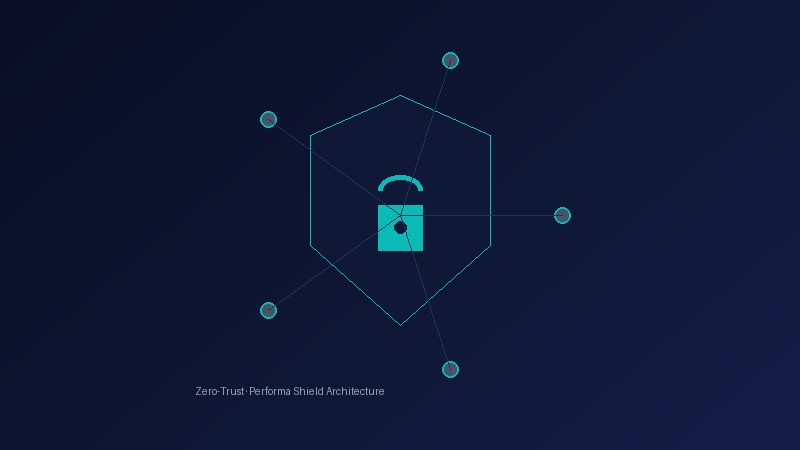
For an AI platform handling sensitive budget data, this architecture is critical. Scotty's “Performa Shield” ensures that each agency's data exists in a completely isolated environment.
The Performa Shield Architecture
Each agency gets its own private AI instance. Your data is encrypted at rest (AES-256) and in transit (TLS 1.3). No agency's data is ever co-mingled with another's. And critically, your data is never used to train or improve the AI models used by other organizations.
This isn't just a technical choice—it's a philosophical one. Government data belongs to the people, and protecting it requires architecture that makes compromise structurally impossible, not just unlikely.
Compliance by Design
Scotty is designed to meet NIST 800-53 standards. Role-based access control, complete audit logging, and data sovereignty (all processing within U.S. borders) are built into the platform—not bolted on afterward.
When it comes to government data, security isn't a feature. It's the foundation.